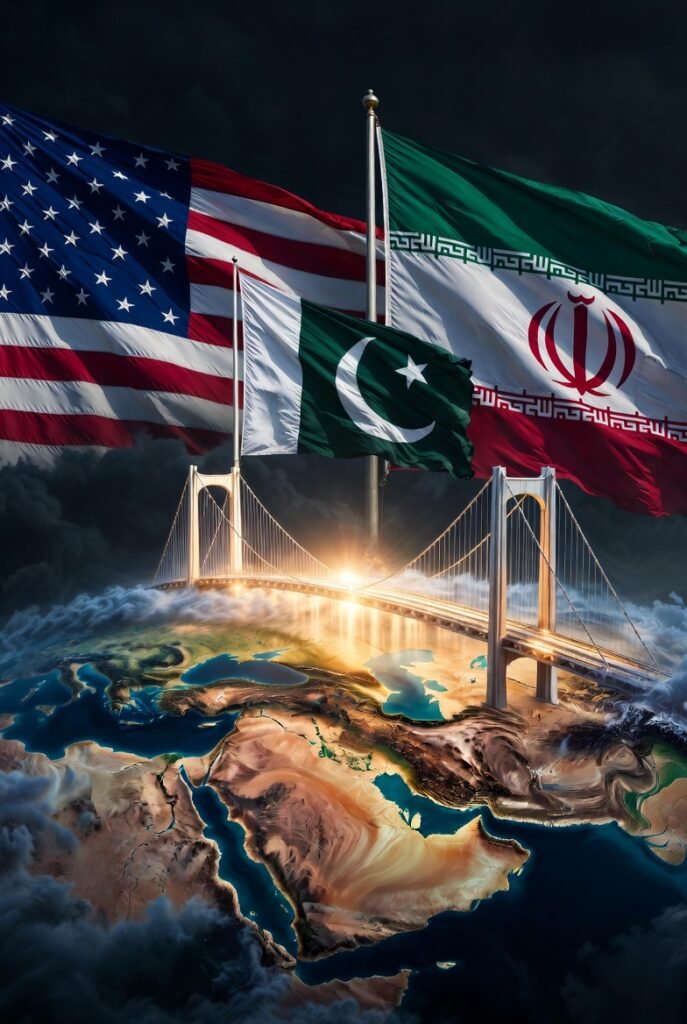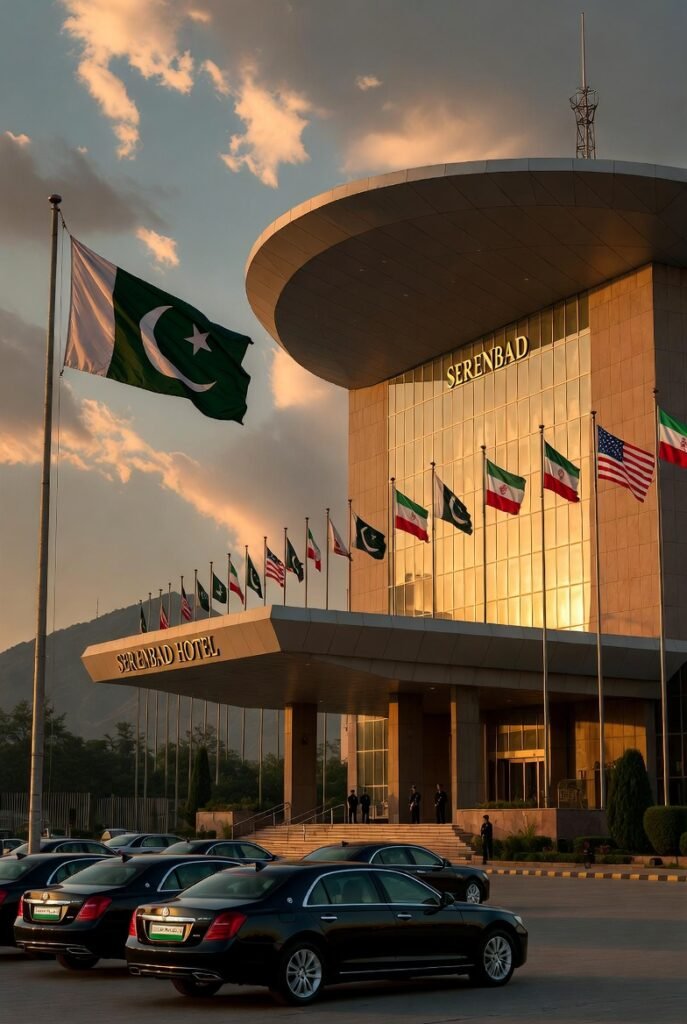
However, in April 2026, the world diplomacy has become an unlikely epicenter of Islamabad. Pakistan is not only hosting but also mediating high stakes peace talks between the United States and Iran amid a shaky ceasefire that came after months of intense fighting. As the U.S. delegation (led by Vice President JD Vance) and Iranian officials engage via back-channels, the leadership of Pakistan, including Prime Minister Shehbaz Sharif to Army Chief Field Marshal Asim Munir, has taken a backstage role not many had anticipated. It is not merely a diplomatic incident; this may be a turning point in the international status of Pakistan.
Over the years, Pakistan has been perceived in terms of its domestic problems, security problems, and regional conflicts. However, the nation is now receiving global applause due to its efforts to bring about dialogue between two giant powers that were on the verge of further intensification. The Islamabad Talks, which started on April 11-12 and are currently headed towards a second round, demonstrate the special status of Pakistan: being trusted by both Washington and Tehran, thanks to decades of balanced politics and strategic location, as well as mediation expertise. With the oil prices around the world varying and the Strait of Hormuz being tense, the move by Pakistan is keeping diplomacy alive when many believe it to be impossible.
In this blog the entire story of Pakistan mediation in the U.S.-Iran peace talks is discussed. We will look at how this role has come about, the strategic advantage it presents, the risks and above all, whether this diplomatic success can bring Pakistan to the level of an established global superpower. Pakistan emerging as a peacemaker in a multipolar world where the traditional powers are experiencing new challenges presents a new story of influence that is based on diplomacy as opposed to military might.
Historic role of Pakistan as a Global Mediator.
The history of Pakistan as an intermediary between opposing forces is long, and may go underestimated. Since the days of its independence as a newly independent state, Pakistan has used its location in South Asia and its connections with the rest of the Muslim world to be facilitative in dialogue. It had silent roles in Afghan peace efforts in the 1980s and 1990s. Pakistan has also played a more recent role in hosting negotiations between regional opponents and has been kept open to both the Western powers and Iran despite the international pressure.
The present U.S.-Iran mediation is the most high-profile one to date. By hosting Islamabad as a neutral location, Pakistan tapped into its many years of diplomatic ties. The Pakistani Foreign Office and military leadership had tirelessly operated behind the scenes to suggest a two-week cease fire plan which finally saw the light of the day in early April 2026 with both sides accepting the plan. It was not a minor accomplishment it had to follow threats of direct confrontation, naval blockade, and an increase in global economic anxiety.
The only difference between Pakistan and Pakistan is that it is credible to both sides. The United States sees the value of Pakistan in counter-terrorism and regional stability, whereas Iran sees the value of the cultural, religious and historical relationships that go back several decades. This two-fold trust has enabled Pakistan to convey messages, offer compromises, and keep discussions alive in situations where face to face negotiations failed. Analysts observe that this mediation style, which is subtle, tenacious and based on mutual respect, has been more effective than other countries of greater volume.
Understanding the 2026 U.S.-Iran Conflict and Ceasefire In order to value the role of Pakistan, one should comprehend the situation of the 2026 U.S.-Iran war. The tension had gained momentum in late February 2026 and the military exchanges caused energy delivery to disrupt the world energy supply and posed a risk of further instability in the region. On April 8, a shaky two-week ceasefire was declared, which was largely attributed to Pakistani diplomacy that called upon both parties to take a step back.
The initial direct talks held in April 11-12 in Islamabad were also marathon talks which failed to reach a complete agreement. But, by the very virtue of meeting in Pakistan, the two sides had made a diplomatic breakthrough. There is now a second round preparation underway with an increased security in Islamabad and Rawalpindi indicating this high stakes.
The intervention in Pakistan happened at a very critical moment when the Strait of Hormuz had been partially blocked, the oil prices had soared to an all-time high of about $100 per barrel and the world was clamoring to de-escalate the situation. Pakistan played a key role by making itself the facilitator, thus not only facilitating the ceasefire but also called upon regional powers such as Turkey, Saudi Arabia, Egypt and China – forming a wider peace coalition.
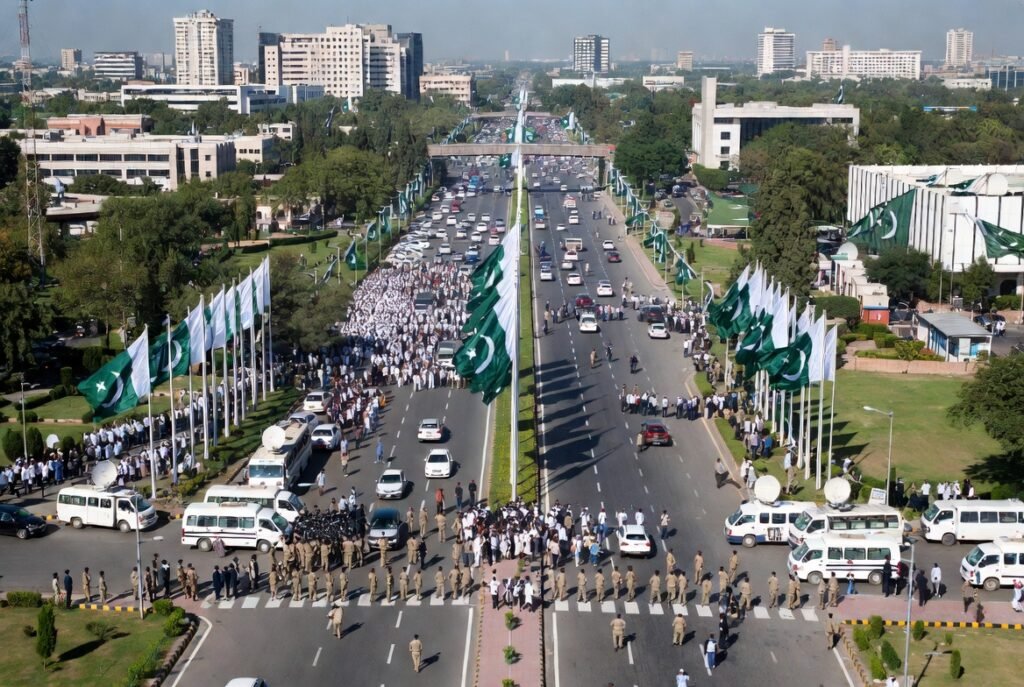
The way Pakistan established itself as the Peace Broker in Iran Peace talks.
The way Pakistan established itself as the Peace Broker for Iran Peace talks.
Pakistan’s emergence as mediator did not happen overnight. The talks were preceded by months of diplomacy. Pakistani officials nurtured close personal relationships with the Trump administration, as they harbored close relationships with the Iranian leadership. The visits of Army Chief Asim Munir to Tehran and the meetings of Prime Minister Shehbaz Sharif with the important allies also played a significant role.
Pakistan offered Islamabad as the venue, and it highlighted its neutrality and security facilities. As the deadline of the ceasefire came near, Pakistani leaders personally mediated with both Washington and Tehran, a way out to save face. Such an offensive strategy made Pakistan the periphery player the center of hostility.
It is also due to the geography of Pakistan. Pakistan was positioned to provide a rare combination of both access and trust due to its strategic alliances with the West and a border with Iran, with which they have a strong cultural connection. This has been termed by international media houses as the diplomatic masterstroke in Pakistan and how the nation has turned a crisis that could have befallen it into an opportunity to gain relevance in the world.
Pakistan can gain strategic benefits through mediating U.S.-Iran talks.
There are several benefits associated with hosting such talks. On the economic front, effective mediation may unlock new investment opportunities, stabilize energy prices which have impacted the imports of Pakistan and enhance its reputation as a secure investment destination. Diplomatically, it empowers the voice of Pakistan in the international arena and also improves relations with the U.S. as well as Iran at the same time.
Regarding security, stable result will regional tensions which usually overflow to Pakistan. It also puts Pakistan in the position to be a partner of choice in future conflict resolution which may give Pakistan more international backing to its own development agenda. Pakistan is already receiving recognition by the international community, and it may lead to improved trade agreements, debt relief negotiations, and collaboration in technology.
Moreover, this scene boosts national pride. As the nation of 250 million with a young and active people, it is possible to feel confident and united home as Pakistan is at the forefront of the world arena in this new scenario of Iran peace talks .
Key threats and difficulties of Pakistan.
Nonetheless, there are high risks despite the gains. Mediation is a sensitive task – failure might hurt the credibility of Pakistan. In case of a breakdown in talks and a re-escalation of conflict, Pakistan may be accused by either party or be accused of favoritism. At home, sectarian sensitivities associated with Iran have the potential to ignite internal unrest unless properly handled.
Security issues are urgent. It is also very expensive in terms of resources to host high-level delegations and any incident would have severe consequences. Trade and remittances of Pakistan are impacted economically by long-term uncertainty in the region. It is also possible to overextend one self without the need to look overseas when there are domestic matters that require immediate concern such as inflation and infrastructure.
Pakistan has to balance this new international status with its relations with China, Saudi Arabia and India. Cruising such alliances without offending either of the sides will be a challenge to diplomatic skill as far as Iran peace talks is related.
The Emerging Geopolitical Influence of Pakistan beyond the Talks.
This mediation activity is also a continuation of a wider trend of Pakistan trying to establish itself globally. Pakistan is diversifying its relations with other countries, starting with its participation in the Shanghai Cooperation Organization, through the increasing relations with other new economies. This trend is enhanced by the U.S.-Iran negotiations that present Pakistan as an accountable actor and not a problem spot.
Analysts believe that successful mediation might see permanent seats at the top tables, more foreign direct investment, and more soft power as a result of cultural and people-to-people interactions. The young, technologically advanced Pakistani diaspora and robust economy offer a good base to this emergence.
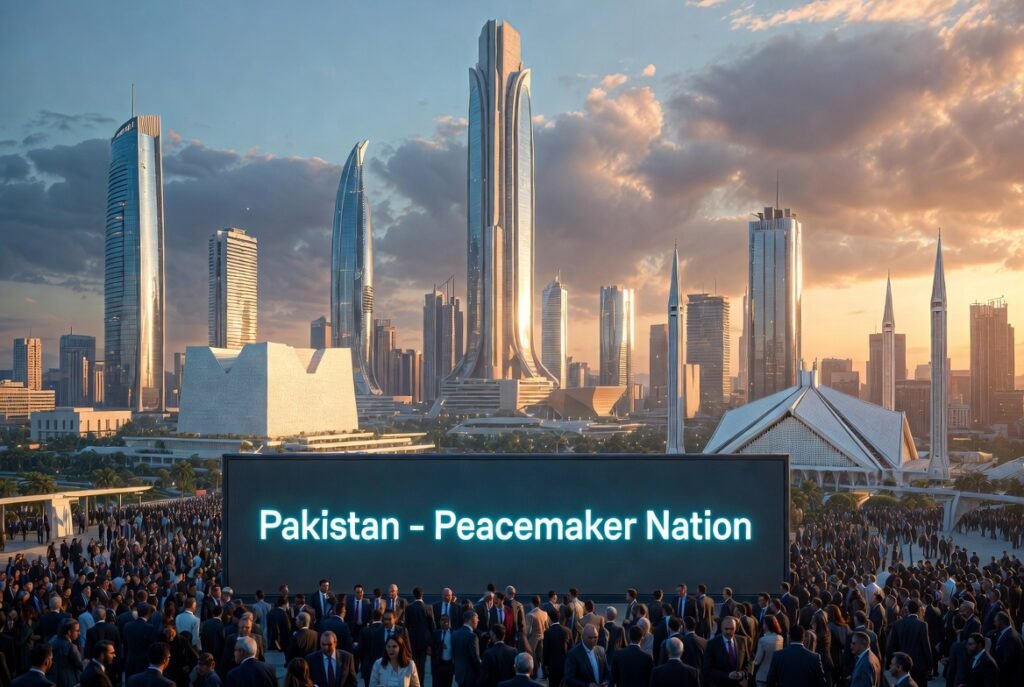
Is it possible that Pakistan can become a Real Superpower in this Peace talks?
The issue of superpower status is a controversial one but worthy of exploration. Traditional superpowers are those that have excessive military, economic and cultural dominance. Pakistan is not at that stage yet, its GDP, military forecast and international organizations are not up to the U.S, China or Russia.
In the multipolar world of today, however, the meaning of superpower may have changed to something else: an influential force in the decisive regions. Pakistan can become a major world power, a superpower of the Global South, that influences events with wisdom, not coercion, should it continue this wave of diplomacy, establish economic strength, invest in education and technology and remain internally stable.
This would be decades of concentrated governance in real life but the present moment gives the push and global goodwill to speed that process along.
Foreign Responses and Scholarship on the Diplomacy of Pakistan.
International responses have been very favorable. Al Jazeera, BBC, The New York Times, and Politico have pointed out that Pakistan is making an improbable rebranding as peace broker. The Iranian and American officials have privately given credit to efforts by Pakistanis to maintain channels open.
Think tank experts observe that the strategy used by Pakistan can be emulated by other middle powers who do not want to confront their way to influence. There has been some warning that success is only sustained by follow-through and not falling into domestic political traps.
The Road Ahead: Future of Pakistan in Global Affairs.
Going forward, Pakistan needs to take advantage of Iran peace talks. It will be important to invest in diplomatic infrastructure, educate more mediators and make foreign policy consistent with economic objectives. The world is watching – and hoping that Pakistan will come out on top with Iran peace talks.
To sum up, the peace talks between the U.S. and Iran hosted and mediated by Pakistan are a historic opportunity. Although it is too early to talk of Pakistan as a superpower nowadays, this diplomatic victory definitely raises its image in the world. It demonstrates that one can be influential through intelligent and tenacious action instead of brute strength and military might.
Pakistan has demonstrated to the world that it can be at the forefront where it counts the most. Unless it takes it to the next level, the vision of higher international acknowledgment is not only possible but it is more likely to become more likely. The Islamabad Talks are not a finale, but a start of Pakistan venturing into the new bold world stage.