
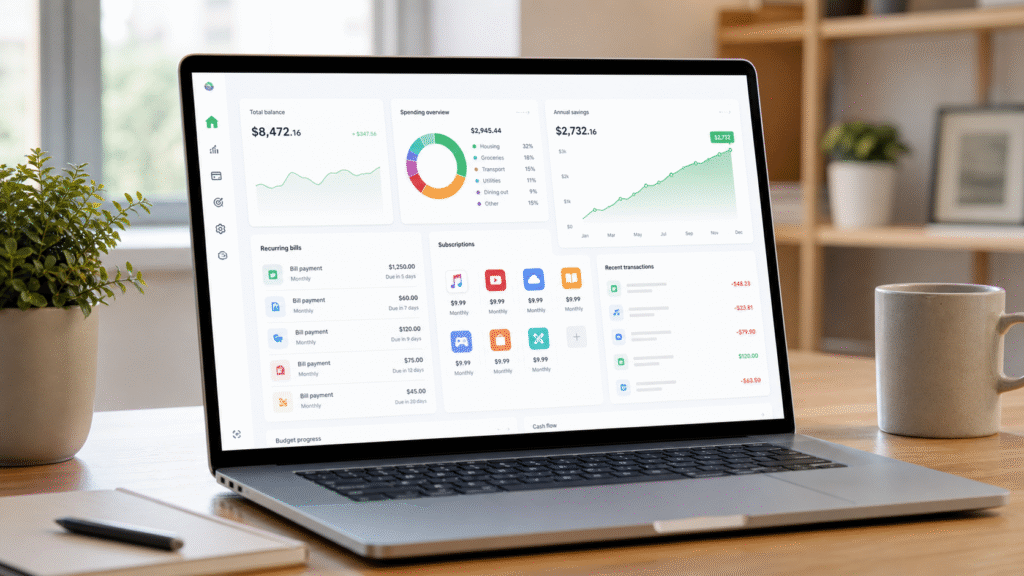
Monthly bills rarely explode overnight. They quietly rise by five dollars here, twelve dollars there, and another “temporary” promotional discount disappears before anyone notices. Internet, phone, streaming, insurance, software, banking fees, and old subscriptions can drain a household budget without creating one obvious emergency. That is why bill negotiation apps have become popular: they find recurring charges, flag price hikes, cancel forgotten subscriptions, and, in some cases, negotiate directly with service providers. The bold promise behind this topic—saving $3,000 per year—is possible for some households with several inflated bills, but it is not guaranteed. A more honest way to view these tools is this: they can automate the annoying financial tasks most people delay. The best apps do not magically beat every bank or provider. They create visibility, apply pressure, and help users stop paying for services they no longer need.
Why AI Bill Negotiation Apps Are Getting Attention
The appeal is simple: most people know they are overpaying, but they do not want to sit on hold, compare plans, threaten cancellation, or read confusing bills line by line. Negotiation apps turn that uncomfortable work into a guided process. Some tools use automated detection to identify recurring payments. Others combine software with human negotiators who contact providers on your behalf.
The “AI” part varies by company. Some apps use automation and transaction analysis rather than fully autonomous artificial intelligence. That distinction matters. A subscription tracker may automatically detect Netflix, gym, or cloud-storage charges, while a negotiation service may still rely on trained staff to call a cable or wireless provider. Either model can save money if it helps you catch waste.
The biggest opportunity is usually not one bill; it is the combined effect of several small leaks. A $15 unused app, a $35 internet overcharge, a $20 mobile plan upgrade, and a $12 banking fee can become nearly $1,000 per year before insurance or cable is included.
What These Apps Actually Negotiate
Bill negotiation services usually focus on recurring household bills where providers have flexibility. Common targets include internet, cable or pay TV, mobile phone service, satellite radio, home security, and sometimes insurance-related comparisons. Billshark says its process starts with users uploading a bill, after which its negotiators seek lower rates and users pay only if savings are found. It also lists internet, wireless, pay TV, and satellite radio among the bill categories it can lower.
These services generally do not “hack” the banking system or erase legitimate debt. They look for discounts, loyalty offers, plan changes, promotional pricing, unused add-ons, and cheaper equivalent packages. In some cases, the savings may come from a lower service tier, so users should review the final outcome carefully before celebrating.
For financial safety, users should ask three questions before accepting any negotiated result: Did the app reduce my service quality? Does the new price expire after a promotional period? What fee will the app take from my savings?

Rocket Money: Best All-in-One Bill and Subscription App
Rocket Money is one of the strongest options for users who want one dashboard for subscriptions, budgeting, spending insights, and bill negotiation. Its website positions the app as a subscription manager that can find and cancel unwanted subscriptions while helping users track spending and manage budgets. The Google Play listing also says Rocket Money can track subscriptions, help cancel them, lower bills, and monitor spending.
Its bill negotiation model is important to understand. Rocket Money’s terms state that its bill negotiation fee can be chosen by the user within a range of 35% to 60% of the first 12 months of savings. That means if the app saves you $20 per month, your annual savings are $240, and the fee depends on the percentage you selected. The service may still be worthwhile for people who never negotiate bills themselves, but the fee reduces first-year savings.
Rocket Money is best for busy users with many subscriptions, multiple cards, and bills that have not been reviewed in years. It is less useful for someone who already audits every charge and calls providers annually.
Billshark: Best Dedicated Bill Negotiation Service
Billshark focuses directly on reducing bills rather than acting primarily as a budgeting app. Its site says users upload a bill, its team negotiates for better rates, and users pay only if savings are achieved. The company publicly claims a 90% success rate and average savings of $450 per successful bill, although individual results will vary.
Billshark is especially useful for people who want a “send the bill and let someone handle it” experience. It can be attractive if you have internet, wireless, cable, satellite radio, or home security bills that have increased after promotions expired. The downside is that the best savings may still require sharing account details and approving changes.
The app store listing describes Billshark as a service that lowers monthly bills, cancels unwanted subscriptions, and helps users lock in better rates for insurance. That broader positioning makes it useful for households that want several recurring expenses reviewed in one place.
BillCutterz: Best 50/50 Savings-Split Option
BillCutterz has been operating since 2009 and uses a simple model: users submit bills, the company negotiates, and if it saves money, the savings are split. BillCutterz states that there is no upfront charge, and if it does not save you money, there is no charge. Its pricing page says successful savings are split 50/50 between the customer and the company.
The advantage of this model is clarity. You know the company is paid only if it finds savings. The disadvantage is that half of the first-year savings may go to the service. For example, if it reduces a bill by $30 per month for 12 months, total savings are $360, but your share may be about $180 before any specific billing arrangement.
BillCutterz may work well for users who have several negotiable bills but do not want to compare plans themselves. It is also relevant for small businesses and nonprofits, since the company says it works with households, businesses, and nonprofit organizations.

Experian BillFixer: Best for Experian Premium Users
Experian BillFixer is a bill negotiation feature connected with Experian’s premium ecosystem. Experian explains that BillFixer negotiates bills for cable, internet, cellphone, and more, helping users save without calling providers themselves. This makes it different from standalone apps because it may appeal most to people already using Experian for credit monitoring or financial identity tools.
The benefit is convenience. A user who already pays for Experian premium services may prefer adding bill negotiation inside an existing financial platform rather than opening another app. The limitation is that it is not necessarily the best standalone choice for every consumer, especially if a lower-cost negotiation service gives similar results.
BillFixer can be useful for people who want to combine credit monitoring, financial awareness, and bill review. But users should still confirm the fee structure, eligible bills, and whether any negotiated savings affect service quality.
Hiatus: Best for Subscription Tracking Plus Negotiation
Hiatus is designed around recurring expenses, subscriptions, and bill monitoring. Its help documentation shows a dashboard with recurring expenses and tabs such as “Cancellable” and “Negotiable,” which signals that the app separates charges users may cancel from bills that may be lowered. Its app listings describe subscription cancellation and bill negotiation features, including alerts and spending visibility.
Hiatus is useful for people whose biggest problem is not one expensive bill but subscription clutter. If you have signed up for trials, streaming services, productivity apps, cloud storage, fitness platforms, and premium mobile services, the first savings may come from cancellations rather than negotiation.
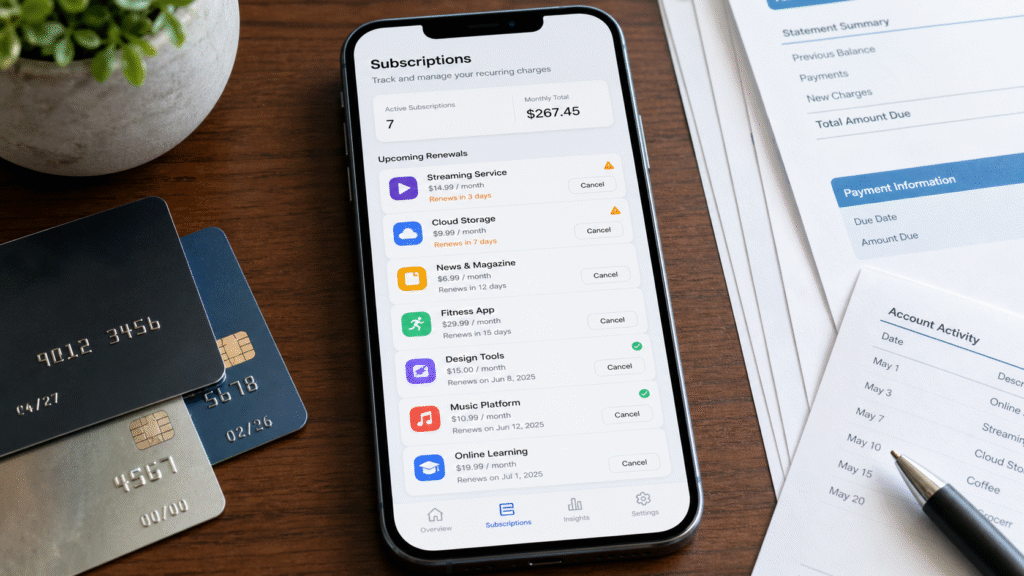
The practical advantage is behavioral: when recurring charges are displayed clearly, users stop treating them as invisible. A $9.99 subscription feels small until five or six similar charges appear in one dashboard.
PocketGuard: Best Budget App With Bill Visibility
PocketGuard is not primarily a classic bill negotiation company, but it deserves attention because many users need bill visibility before negotiation. A current PocketGuard comparison page says Rocket Money offers optional bill negotiation and that PocketGuard focuses on budget simplicity, helping users understand what they can spend. That makes PocketGuard better suited for users who want to control spending patterns, not just negotiate telecom bills.
The strength of a budgeting-first app is that it can reveal whether savings are being lost elsewhere. Negotiating internet by $25 per month helps, but if dining, shopping, or subscriptions are rising faster, the household budget may still feel tight. PocketGuard can support a broader money system: track income, identify recurring charges, and show safe-to-spend amounts.
It is best for people who want clarity before action. If your bills are messy and you do not know where money goes, a budget-first tool can be the first step before using a negotiation concierge.
Subscription Trackers Like Bobby, Subby, and Similar Apps
Not every useful savings tool needs to negotiate directly. Consumer Reports has recommended using apps such as Bobby, Rocket Money, and Subby to remind users to cancel before free trials end. That may sound basic, but trial reminders can prevent months of unnecessary charges.
These apps are especially helpful for people who rotate streaming services, try new software, or subscribe to annual plans and forget renewal dates. A single annual renewal for a design tool, storage plan, premium app, or entertainment service can cost more than several months of careful grocery savings.
Subscription trackers are best for users who prefer to make their own decisions. They may not call your provider, but they give you a clean list of what is draining your card. For many households, visibility alone is enough to trigger cancellations.
Can These Apps Really Save $3,000 Per Year?
A $3,000 annual savings claim should be treated as a high-end outcome, not a normal result. It may happen if a household has several expensive bills, unused subscriptions, insurance overpayments, old cable packages, and multiple phone lines. BillCutterz displays a customer example with nearly $1,500 in savings across cable, internet, cellphone, satellite radio, and home security, showing that large savings are possible in some cases. Billshark claims average savings of $450 per successful bill, which could add up if multiple bills are successfully negotiated.
However, the realistic net savings depends on fees. If a service takes 40% to 50% of first-year savings, a $1,000 gross reduction may become $500 to $600 in first-year net savings. The second year may be different depending on the agreement, provider pricing, and whether promotional rates expire.
A smart target is to aim for $500 to $1,500 in first-year net savings, then treat anything above that as a bonus. The real win is building a yearly bill audit habit.
How to Use These Tools Without Losing Control
Start by gathering your last three months of bank and credit card statements. Then list every recurring charge. Separate them into four groups: cancel immediately, downgrade, negotiate, and keep. This prevents an app from becoming another subscription you forget to evaluate.
Before submitting bills, read the fee terms. Some services charge a percentage of first-year savings. Others split savings. Some may require authorization to speak with your provider. Also check whether the negotiated plan includes a contract, early termination fee, lower speed, reduced data, fewer channels, or promotional pricing that expires.
For the best results, use automation and human judgment together. Let apps find patterns, but make final decisions yourself. Saving money is not helpful if it removes a service your household genuinely needs.

Final Verdict: The Best App Depends on Your Money Leak
Rocket Money is the best broad choice for users who want subscription tracking, budgeting, cancellation help, and bill negotiation in one app. Billshark and BillCutterz are stronger if the main goal is dedicated negotiation. Experian BillFixer may make sense for people already inside Experian’s premium ecosystem. Hiatus is useful for subscription-heavy users. PocketGuard is ideal for budgeting clarity. Simple subscription trackers can still prevent costly renewal mistakes.
The smartest strategy is not to trust one app blindly. Use one dashboard to identify recurring charges, one negotiation service for expensive bills, and one personal rule: review every major bill at least twice per year. Banks and service providers may not hate these tools, but they certainly benefit when customers never ask questions. A few hours of automated review can turn silent overpayments into real savings—and for the right household, the annual result can be substantial.