
Living with the Bots: The Real State of AI in Pakistan (2025)
Let’s be honest for a second. If you told me five years ago that I would trust a computer to tell me which route to take during a rush hour protest in Karachi, I would have laughed. We love our “jugaad,” right? We trust our gut. But here we are in late 2025, and the script has flipped completely. The air feels different. It isn’t just the smog; it is the silent hum of efficiency creeping into our chaotic lives. AI in Pakistan has officially moved past the buzzword phase. It is sitting right there at the dinner table with us.
I want to take you through a regular day in this country. Forget the press releases and the tech conferences. I’m talking about real life. The sweat, the noise, and the surprising moments where technology actually saves the day. This is how we are living now.
The End of “Ratta”: Education Wakes Up
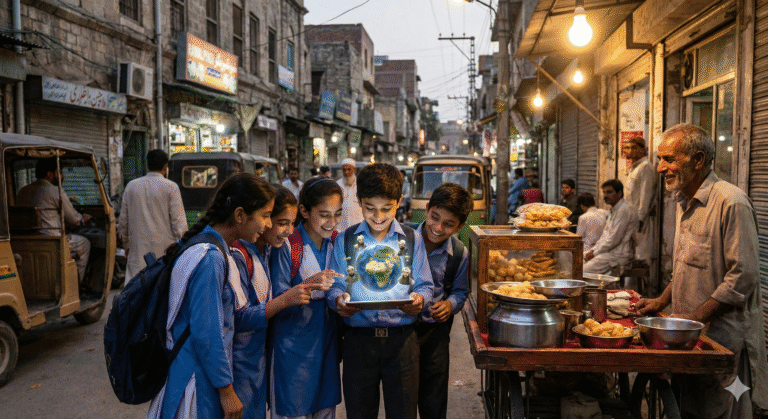
You remember school, don’t you? The endless memorizing. The “ratta” culture. It defined us. But walk into a classroom today, and you might get a shock. My nephew goes to a mid-tier school in Rawalpindi, nothing fancy. He doesn’t carry a heavy bag anymore. He carries a tablet that knows him better than I do.
This is where AI in Pakistan is pulling its weight. The software tracks where kids get stuck. If a student doesn’t get physics, the system doesn’t shame them. It changes the lesson. It offers a video, a quiz, or a game. Teachers aren’t just lecturers; they are becoming guides. They have stopped shouting at the backbenchers and started looking at the data. It is messy, and we are still figuring it out, but for the first time, learning feels personal. We aren’t just churning out robots; we are using robots to build thinkers.
Healing Without the Headache
Let’s talk about hospitals. The anxiety of waiting rooms is universal. But the healthcare scene is shifting. I have family in a village near Sialkot. Previously, a simple diagnosis meant a day-long trip to the city. That is over. Local clinics now have diagnostic kits powered by smart algorithms.
A nurse takes a picture of a skin rash or scans an eye, and the system runs it against millions of medical records instantly. It flags the serious stuff immediately. This is the magic of AI in Pakistan. It brings the specialist to the village. We aren’t waiting for the infrastructure to catch up; we are leapfrogging it. Lives are being saved because a piece of code noticed a pattern that a tired human doctor might have missed. That is a win in my book.
Navigating the Urban Jungle
If you drive in Lahore, you know the pain. The traffic there tests your soul. But have you noticed the signals lately? They aren’t just blinking blindly. They are watching. Smart cameras count the cars and adjust the green lights in real-time. It doesn’t fix everything—we still drive like maniacs—but the gridlocks break up faster.
And then there is the ride-hailing game. The captains are happier. Why? Because the apps predict demand with scary accuracy. They know when the rain is coming before the first drop hits the windshield. They send drivers to the right spots. As a passenger, you wait less. AI in Pakistan is essentially the invisible traffic warden we always needed but never had.
The Freelance Economy on Steroids
We have always had a massive youth population. Now, they are armed with tools that make them dangerous competitors on the global stage. A graphic designer in Multan isn’t just using Photoshop; she is using generative tools to do the work of ten people. She earns in dollars, spends in rupees, and boosts the local economy.
These kids use AI to write better emails, code faster, and manage clients in different time zones. They are building agencies from their bedrooms. The government didn’t do this. The corporate sector didn’t do this. The kids did this, using AI in Pakistan to level the playing field. It is the ultimate equalizer.
Farming: The Oldest Job Meets the Newest Tech
This one is my favorite. Go to the wheat belts in Punjab. You will see drones buzzing over the fields like giant mosquitoes. They aren’t toys. They are scanning the crops for disease. They tell the farmer exactly which patch needs water and which patch needs nitrogen.
Water is gold here. We cannot waste it. These smart systems ensure that every drop counts. Farmers get alerts on their phones—cheap smartphones, mind you—telling them to harvest because a storm is predicted in 48 hours. This isn’t just convenience; it is food security. When AI in Pakistan touches agriculture, it feeds the nation. It turns uncertainty into a calculated risk.
The Shopping Addiction is Real
Okay, admit it. You bought something online this week that you didn’t need. The algorithms have us figured out. You mention “wedding season” once, and suddenly your feed is full of kurtas and shoes. It feels invasive, sure, but it is also incredibly convenient.
Local brands are exploding because they can finally find their customers. A shoemaker in Peshawar doesn’t need a billboard in Islamabad. He just needs the algorithm to find the guy in Islamabad who loves Peshawari chappals. Commerce is flowing faster than ever. The friction is gone.
So, What is the Verdict?
Look, it isn’t a paradise. We still have power outages. The internet slows down when we need it most. And yes, there is a fear of jobs disappearing. But the resilience of this nation is legendary. We don’t run from change; we adapt. We absorb it.
The role of AI in Pakistan isn’t to replace us. It is here to handle the boring, repetitive stuff so we can focus on being human. It handles the traffic lights so we can get home to our families. It scans the X-rays so the doctor can hold the patient’s hand. We are stepping into 2026 with our eyes open. The bots are here, and honestly? They are making life a little bit easier.